


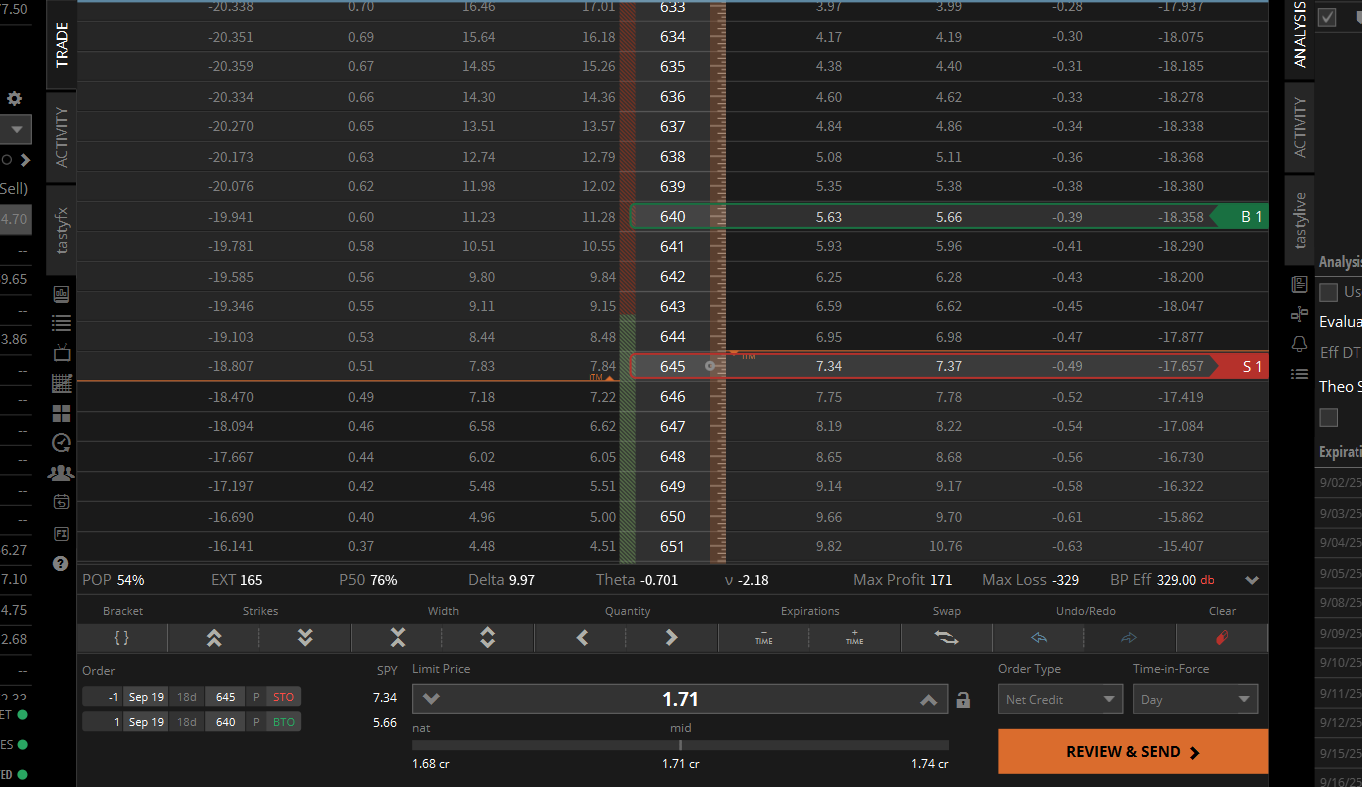
Most weeks do not need a strong opinion. They need a structure that gets paid when nothing much happens, and this was one of them. The expected move was small, price was sitting in a clean range, and there was premium worth collecting on both sides. That is the setup an iron condor is built for.
Reading the week first
Before touching the chain, I checked the expected move using the at-the-money straddle as a proxy. It pointed to a tight range through expiration. The chart agreed: SPY was holding above support and stalling under a clear resistance level, with momentum flat. No reason to bet on a breakout in either direction.
When the market is telling you it does not know where it is going, get paid for that uncertainty instead of guessing.
Building the condor
An iron condor is two credit spreads, one above price and one below. I sold strikes outside the expected move on both sides and bought protection further out to cap the risk. The goal is simple: collect the credit and let both spreads expire worthless if SPY stays in the range.
The pieces I cared about, in order:
- Strikes outside the expected move so normal noise does not threaten the position.
- Defined width on each spread so the maximum loss was known to the dollar before entry.
- Enough credit to make the risk worth taking, not a few cents for a lot of exposure.
Where I planned to manage
The plan matters more than the entry. If price pushed toward one wing and that short strike got tested, I would roll the untested side closer to collect more credit, or close the threatened spread before it reached max loss. I set those decision points before the trade was live, so I was not improvising under pressure.
How it played out
Price drifted, tested the upper side once midweek, then settled back into the range. I took profit early rather than holding for the last few dollars of premium into expiration. Closing a winner early is rarely the wrong call. It frees up capital and takes assignment risk off the table.
The takeaway
This was not an exciting trade, and that is the point. A repeatable structure, defined risk, and a management plan written down in advance. Do that a hundred times and the math works for you. Chase excitement and it works against you.